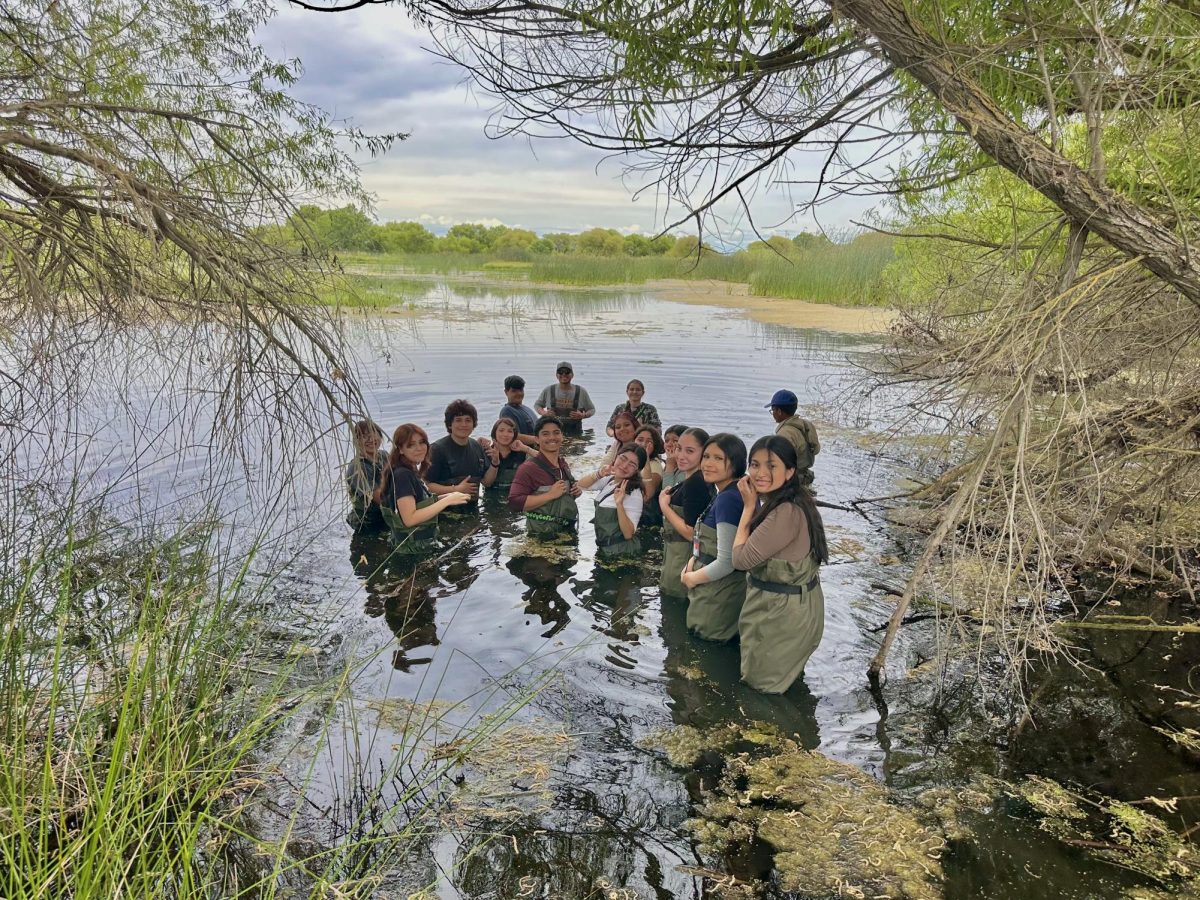
On April 9, students from Mr. Salaz’s AP Environmental Science class and the Environmental Club went on a field trip to Bowles Farm to learn more about sustainability and environmental science outside of the classroom.
This was the second year students have visited the farm as part of a collaboration connected to a hedgerow project. While they were there, they worked on a hedgerow project by planting native plants and learning how they grow over time. These hedgerows help improve soil, support wildlife, and make farming more environmentally friendly.
Instead of just learning from a textbook, students were able to actually go outside and do the work themselves. They helped plant and observe vegetation, which made it easier to understand how these projects really impact the environment. It gave them a better idea of how things like biodiversity and ecosystem health actually work in real life, not just on paper.
According to Salaz, the main goal of the trip was for students to actually take something away from it. “I hope students gained a deeper appreciation for environmental conservation through hands-on learning,” he said. He explained that doing things like hedgerow planting helps students see how soil health, biodiversity, and farming are all connected instead of just separate topics in class.
The trip also helped students understand why agriculture matters. “Learning about farming and agriculture helps students understand where their food comes from and the environmental challenges farmers face,” Salaz said. He explained how it’s important to see how farming and the environment connect, especially when it comes to using resources the right way.
A lot of what students did on the trip connected back to what they’ve been learning in class. “The trip directly reinforced key AP Environmental Science concepts,” he said, including biodiversity, ecosystem services, and human impact. Students also checked out pond ecosystems and talked about water quality and eutrophication, which made these topics easier to understand.
Trips like this make learning feel more real and show students that what they’re learning in class actually matters outside of school.